Equipment and Safety
Why does falling scare you more than skating itself? The right protective gear lowers your injury risk and takes the edge off the fear that blocks you.
Introduction
Why does the fear of falling scare you more than the actual skating? The honest answer: because you haven't yet felt that your gear will catch you. The right protective gear cuts your injury risk significantly and takes away a lot of the fear that blocks you from learning.
Feel safe, and you tense up less — which means you learn new movements on wheels noticeably faster. That's why we start at DOMISPORTS not with technique, but with the gear that protects you: helmet, pads, and properly laced skates. Take your time with this setup — every minute here pays off in less fear and more progress once you're actually rolling. The good news: once your gear is dialed in, it stays that way for months without you having to think about it again.
What You Need
- Beginner inline skates: 4 wheels, 80-84 mm diameter for a low center of gravity and stability, plus a high cuff for lateral support.
- Heel brake: A mounted rubber stopper on the right or left skate — your most important braking tool at the start.
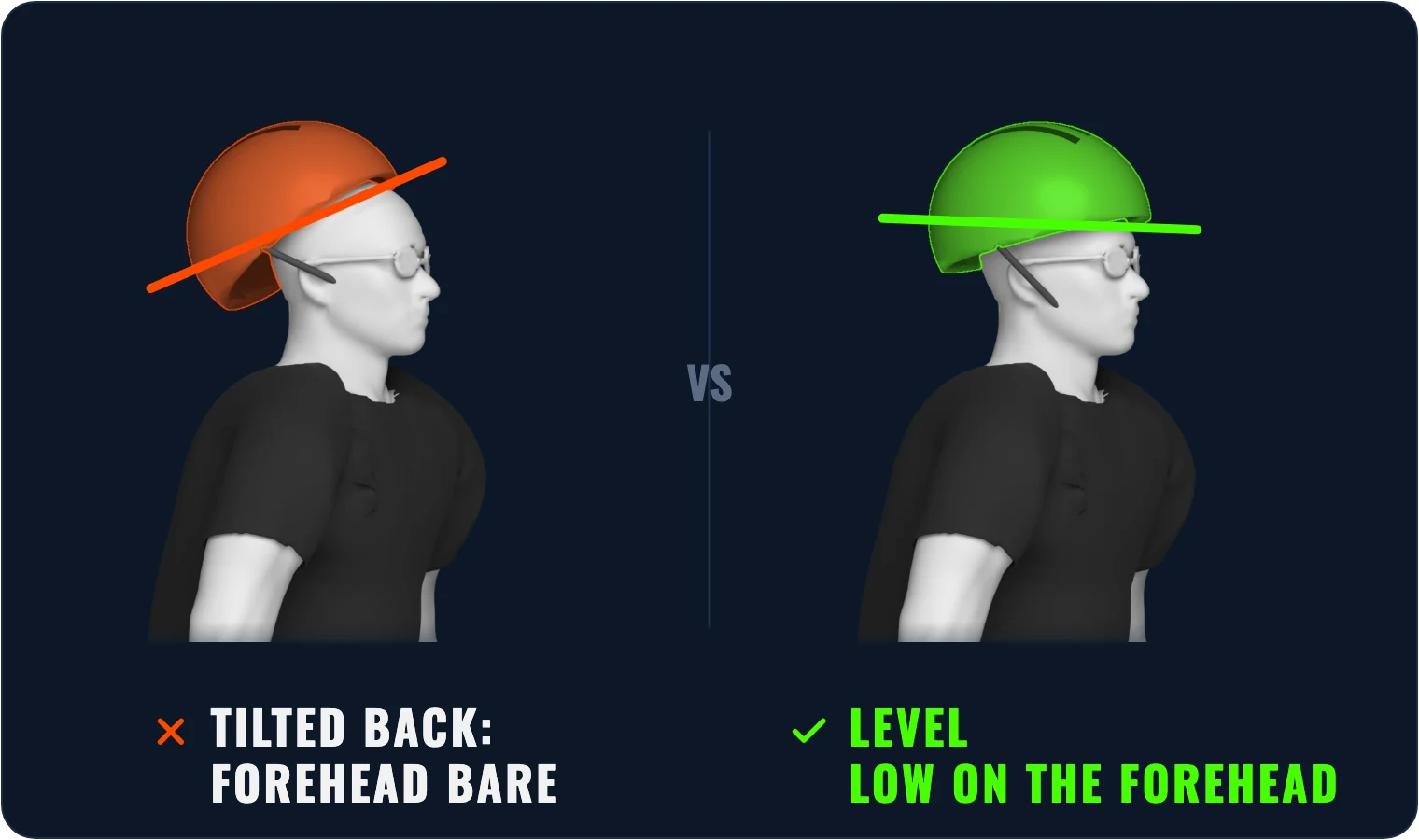
- Helmet certified to EN 1078 (bike/skate): sits level and low on your forehead and reaches well down the back of your head. Two fingers fit between chin strap and chin.
- Pad set: Wrist guards, elbow pads, knee pads.
- Technical socks (no cotton) that reach above the cuff — try your skates on with exactly these socks.
- Comfortable sportswear you can move freely in.
Step by Step
1. Putting on Pads Correctly
Safety starts before you put your skates on: protective gear always comes first. Knee pads first, then elbow pads. Then the helmet — chin strap snug, not pinching. Finally the wrist guards, because your reflex during a fall is to catch yourself with your hands — that's why they're the most important protection after your helmet.
2. Putting on and Lacing Skates Correctly
A skate needs to fit snugly — too much room means blisters and less stability. Put the skate on and tap the rear wheel lightly on the ground so your heel slides deep into the heel pocket. Then close every fastener your skate has — laces, instep buckle, top cuff buckle: firm, but without numbness. Your heel must not lift while you skate.
Common Mistakes
- A cuff that's too soft or too loose: If your foot collapses inward inside the skate, you lack lateral support. Fix: a firm, high cuff and a snug heel — hard, soft, or hybrid boot is a question of fit.
- Removing the heel brake too early: Often taken off for looks before other braking techniques are solid — yet for beginners it's the most effective brake and the quickest to learn.
- Standing with locked knees: Shifts your weight onto your heels and invites uncontrolled backward falls.
- Lacing too loose out of fear of pressure points: A loose skate lets your ankle tip instead of supporting it — lace firmly and loosen only the spot where it pinches.
- Wrong wrist guard position: The hard shell belongs on your palm, not the back of your hand. Mounted wrong, it barely protects you during the typical fall reflex.
Safety Notes
Full protective gear is our standard, not an extra. Straight talk about injuries: the most common one is a broken wrist after falling onto an outstretched hand — roughly one in four inline injuries. Head injuries are rarer but the most serious, so always wear a helmet. And serious injuries hit adult beginners hardest: no slopes until you can brake.
Remember the most important rule: "Oh no, go low!" Lose your balance and immediately bend your knees deep. That lowers your center of gravity, stabilizes you — and if needed, makes a controlled fall forward more likely, knee pads first. And before every session: warm up loosely for a few minutes, for example walking, leg swings, a few squats.
Pro Tip
Use your protective gear as mental training. Practice controlled falls on grass while wearing your pads. Once you experience that a fall onto your pads usually ends harmlessly, the panic loses its grip for many people — and you skate more relaxed. Those five minutes of practice save you more frustration in your first weeks than any technique drill.
FAQ
Do I really need full protective gear even for short, easy sessions?
Yes. Most falls happen exactly during the early phase, and unexpectedly — one short outing without pads is enough for a serious injury. Wear it consistently until braking and balance feel solid.
How tight should I lace my skates?
Tight enough that your heel sits firmly in the heel pocket without sliding, but not so tight it hurts or cuts off circulation. The test: your heel must not lift while you skate.
Soft boot or hard boot — which is better for beginners?
Fit decides, not boot type. What matters is a firm, high cuff and a snug heel — then you get lateral support, whether it's a hard, soft, or hybrid boot. Try several models in the shop with your skating socks.
When can I take off the heel brake?
Only once you can do other stops — T-stop, plow, and lunge stop — smoothly, including on slopes. Until then, the heel brake is your most effective brake.
How do I get used to skating without fear of falling?
Practice deliberate controlled falls on soft ground like grass, wearing full protective gear. Many people find that a fall onto the pads usually ends harmlessly — and that takes the fear away bit by bit.
Key Takeaways
- Wrist guards and elbow pads cut your injury risk significantly and take the edge off your first meters — they don't make you fracture-proof.
- A firm, high cuff with a snug heel gives you lateral support — hard, soft, or hybrid boot is a question of fit.
- The heel brake is the most effective brake for beginners and easy to learn — practice it slowly first before you rely on it.