Stopping with the Heel Brake
The heel brake is the most important brake for beginners: scissor stance, rear knee deep, tap the stopper, build pressure gradually — that's how you stop under control.
Introduction
"Which braking technique should I learn first?" Honest answer: the heel brake. It's the easiest brake for beginners to learn — and, well practiced, the most effective one your skates have. The German inline skating instructors' association (DILV) calls the heel stop the most effective way to brake.
Even so, it often gets a bad reputation: many skaters unscrew the stopper too early, before they've mastered an alternative. As long as you can't stop, you skate tense — and that drags down your whole learning progress. In this guide you learn it step by step, from the first touch to stopping on a line.
Straight talk up front: you can't stop on a dime with the heel brake. You need a few meters of braking distance — so start early and look ahead.
What You'll Need
- Inline skates with a heel brake: usually factory-mounted on the right skate. On many models you can move it to the left — if your left foot rolls more steadily in front, that's worth doing before you practice braking. Also check that the brake pad still has enough rubber.
- Full protective gear: helmet, wrist guards, elbow pads, and above all knee pads.
- A flat practice surface: smooth, dry asphalt with no slope and no traffic — an empty parking lot is ideal.
- Prerequisite: you can roll a few meters steadily in the basic stance and in the scissor position (level 7).
Step by Step
1. Move Into the Scissor Position
You start from a steady glide. Push the skate with the brake straight forward until the brake sits clearly in front of your rear skate. Keep your skates close together, hip-width at most — otherwise you'll turn while braking.
2. Sink Into Your Rear Knee, Upper Body Slightly Forward
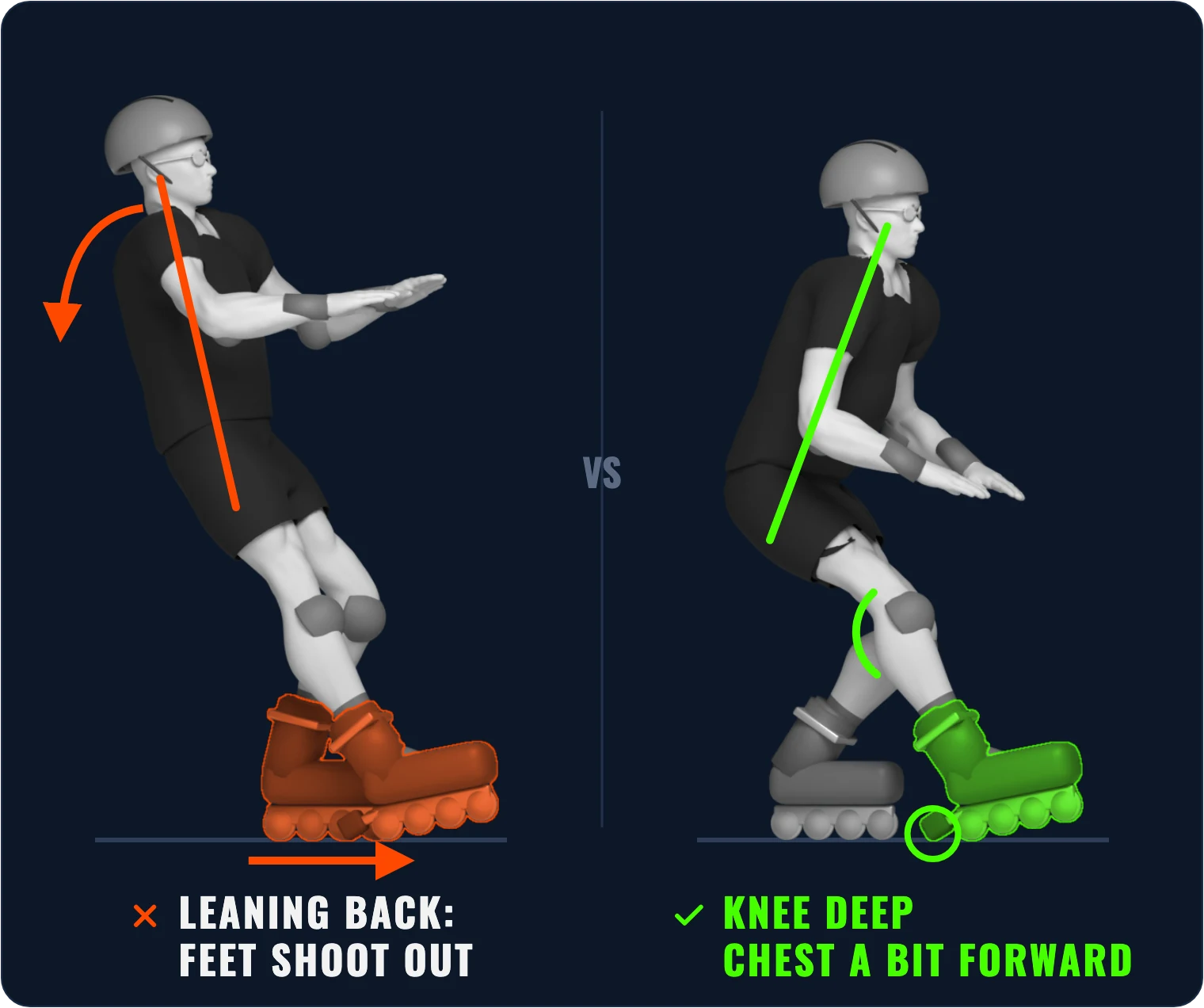
Bend the knee of your rear leg deep, as if sitting down on a stool. Keep your upper body steady and tilted slightly forward, arms in front at hip height, eyes ahead. That keeps you stable over your skates — lean back, and the skates roll out from under you.
Just don't fold at the hips: back straight, chest open.
3. Lift Your Toes: Tap First
Lift the toes of your front skate until the stopper lightly drags. First just tap it and release, then let it drag longer. That's how you get a feel for how the brake grips.
4. Build Pressure Gradually
Now put more and more weight onto your braking foot while sinking deeper into your rear knee. The more weight on the stopper, the harder it brakes — that's simply friction.
Dose the pressure instead of stomping: sudden pressure makes the brake chatter and throws you off balance.
5. Target Braking
Once the stop works, turn it into a game: roll in at the same speed and stop at a line or a cone. Once that works calmly several times in a row, roll in a little faster — still only on flat ground.
Common Mistakes
- Leaning back: many people instinctively lean back while braking because it feels like more pressure. With straight legs, the skates then roll out from under you, and you land on your tailbone. Fix: sink into your rear knee, upper body slightly forward, hands in front.
- Folding at the hips: the opposite goes wrong too. Fold your upper body forward over the brake and you lose leverage and balance. Fix: back straight, chest open.
- Too little distance between the skates: without a proper scissor position, the brake isn't far enough forward and you can't get pressure on the stopper.
- Stomping instead of dosing: sudden pressure makes the brake chatter. Fix: tap, drag, then gradually more.
Safety Notes
When you brake, your upper body wants to keep rolling. Brace your core and sink lower instead of folding forward. If it gets shaky, our rule of thumb applies here too: "Oh no, go low!" — bend your rear knee even deeper.
Practice while rolling slowly and steadily (too slow gets wobblier), and only move to gentle slopes once you can stop calmly at a line several times in a row.
Where to practice: only away from traffic. When you're out and about in Germany, inline skaters legally count as pedestrians: you belong on the sidewalk and adjust your speed to the people walking. Bike paths and roads are only allowed where an extra sign explicitly permits skating — so a bike path is no place to practice.
Pro Tip
Make your braking distance visible: put two markers a few meters apart. At the first one you start braking, at the second you want to be standing still. You'll be surprised how much room you need at first. That exact feel helps you later in everyday skating: know your braking distance, and you start braking early enough.
FAQ
Why do experienced skaters often talk down the heel brake?
Mostly habit or looks — for beginners, neither is a reason against it. The German inline skating instructors' association calls it the most effective way to brake and, well practiced, the best option on slopes. Only switch to other techniques once you can reliably replace it.
When should I unscrew my heel brake?
Only once you can do other stops — T-stop, plow, and lunge stop — smoothly, including on slopes. Before that, you'd be out without a reliable brake in an emergency, and that's an unnecessary risk.
Why do I always fall backward when I brake?
Because you instinctively lean back and straighten your legs — then the skates roll out from under you. Instead, bend your rear knee deep, keep your upper body tilted slightly forward, and your hands in front. That keeps your weight over your skates.
How much weight should I put on my braking foot?
Increase it gradually. The more weight on the stopper, the harder it brakes — but only as much as you can hold steadily. Keep your rear knee deeply bent, or you'll lose your balance. Tap first, then drag, then more pressure.
Does the heel brake work downhill too?
Well practiced, yes — then it's the most effective brake on slopes too. But you only get there once it's solid on flat ground: you can stop calmly at a line several times in a row. Until then, avoid slopes completely.
Key Takeaways
- The heel brake is the easiest brake for beginners to learn — well practiced, it's the most effective one at higher speed and on slopes too, but only once it's solid on flat ground.
- Never lean back: rear knee deep, upper body slightly forward, back straight — that keeps you stable over your skates.
- You can't stop on a dime with the heel brake: start braking early and plan your braking distance.