Basics of Running Technique and Posture
Overstriding brakes you with every step: a hard heel strike far out front. Here's how to dial in posture, arm swing, and cadence for joints that last.
Introduction
Evolution perfectly adapted the human body for endurance running. Yet in our sedentary everyday world, running is a complex motor skill that has to be actively trained — modern sports science sees it as a system of biomechanics, not pure instinct.
The analyses on running economy are clear: an inefficient running style wastes unnecessary energy, burns too much oxygen, and drastically increases your injury risk.
The main culprit is so-called "overstriding" — hard heel-striking far in front of your center of mass with an almost fully extended knee. This generates abrupt braking forces and heavy strain on the knees and shins. This guide shows you how to run cleanly from the start, so it feels effortless while your bones and tendons stay protected.
What You Need
- Individually fitted running shoes: Ideally selected after a professional treadmill gait analysis at a specialty store. The right footwear prevents harmful faulty loading patterns and, if needed, corrects unnatural heel overpronation.
- Functional running gear: Breathable clothing that doesn't restrict your range of motion. Especially around the shoulders, you need enough freedom for fluid arm swing.
- A smartphone camera (optional): To have a friend film you from the side. On video, postural flaws and incorrect foot strike show up far more honestly than through your own body sense.
- A flat, even route: Asphalt or a very even forest trail is excellent for letting you focus entirely on technique and foot strike.
Step by Step
1. Adopting an Upright Posture
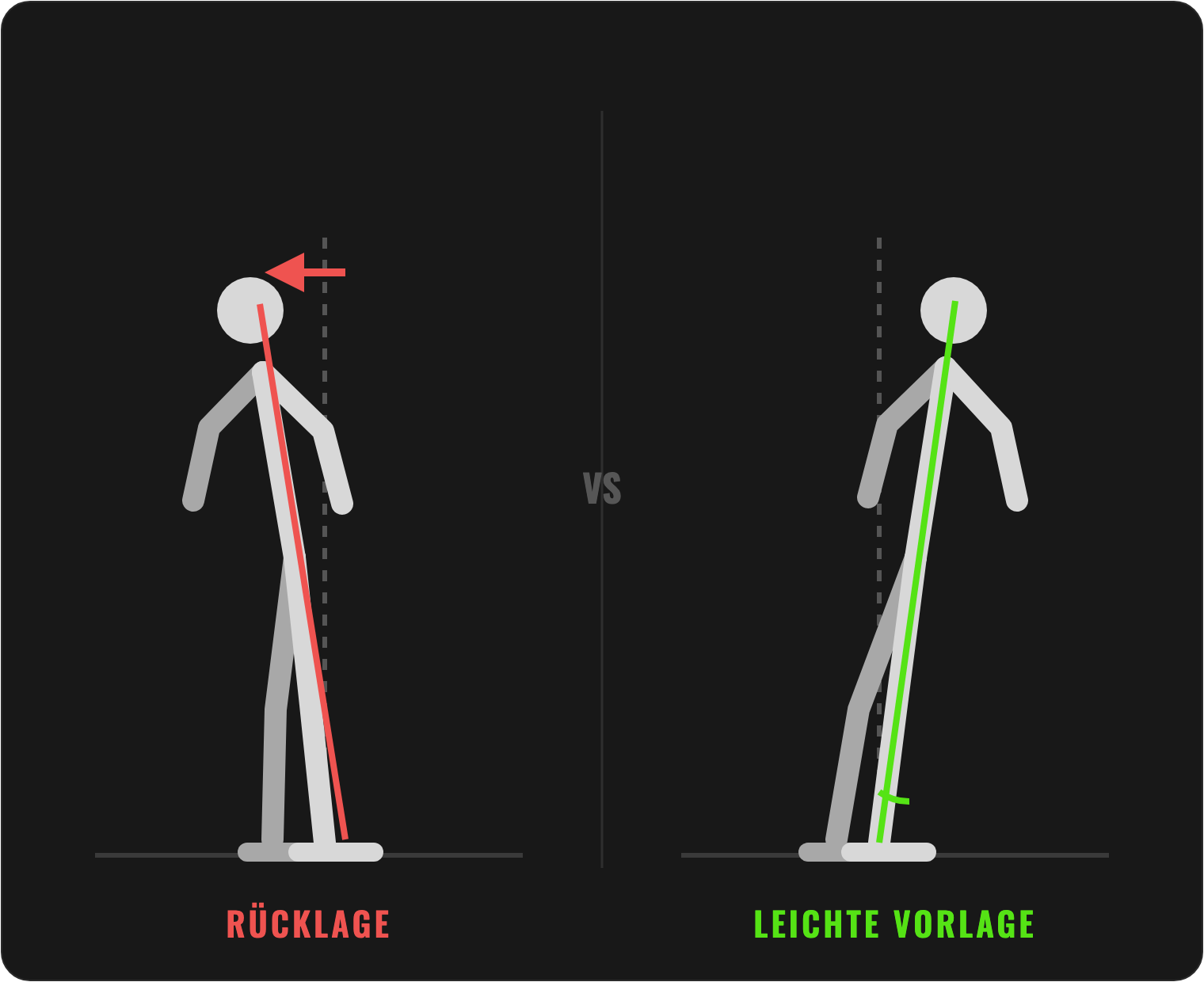
A clean running style doesn't start at your feet, but in your head and your core. While running, deliberately make yourself tall and direct your gaze into the distance (about 10 to 20 meters ahead), instead of constantly looking at your feet.
Your core stays stable. Your entire body leans minimally forward like a rigid plank, pivoting from the ankles. This slight forward lean uses gravity for propulsion, while an open chest widens your lungs and makes deep breathing easier.
2. Using Arm Swing as Your Pacemaker
Many beginners underestimate their arms — but they're actually the real engine of your leg cadence. Bend them at a right angle, about 90 degrees. The swing comes from the shoulders and moves straight forward and back alongside the body.
Pay meticulous attention to making sure your hands never cross your midline (your breastbone). If you row across your chest, you provoke constant upper-body rotation, which eats up a lot of forward energy and slows you down. Keep your hands loose — don't clench hard fists.
3. Shaping a Soft, Efficient Foot Strike
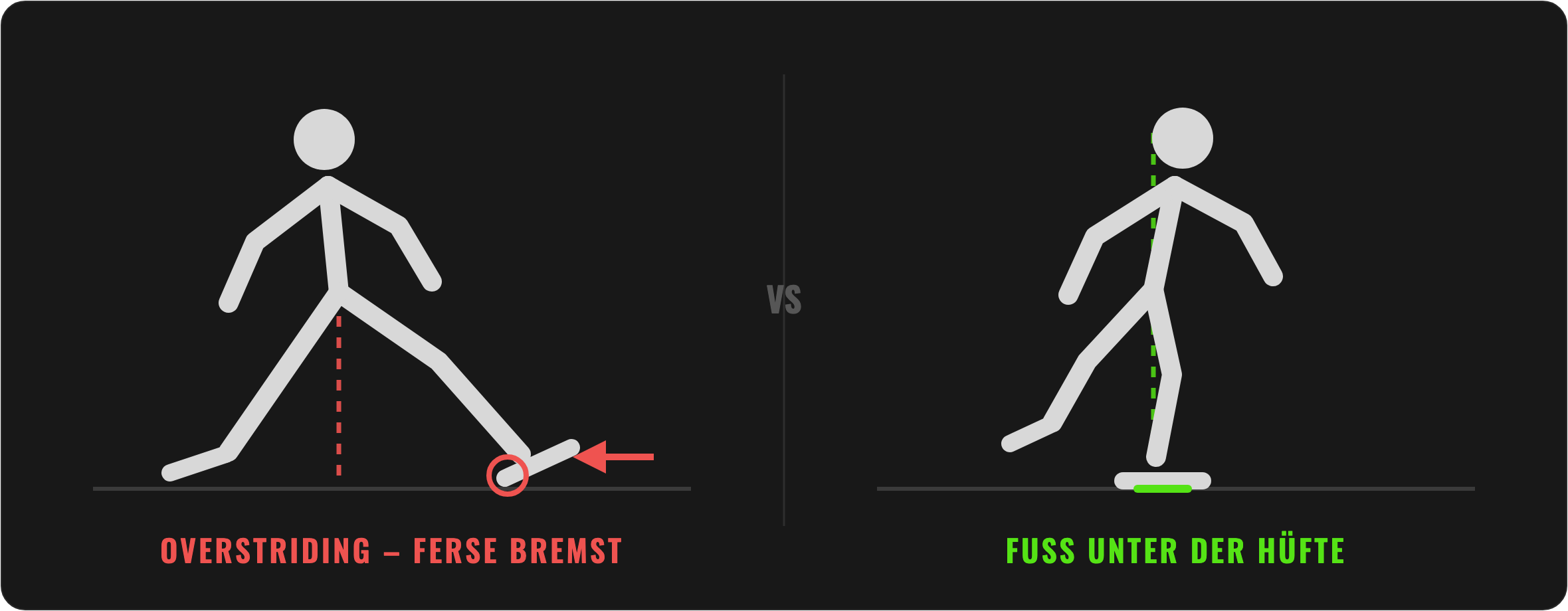
The debate between heel, midfoot, and forefoot striking is huge. For beginners, the rule is simple: don't force an extreme forefoot strike — retraining onto the ball of the foot without months of adaptation almost inevitably overloads the calf and Achilles tendon.
Instead, aim for a healthy, economical midfoot strike. Land the foot softly and as flat as possible, directly under your hip (your center of mass). A quiet, "soft" landing cushions the impact through your calf and thigh muscles and stops shockwaves from shooting directly into your knee and hip.
4. Increasing Stride Frequency (Cadence)
A stride that's too long ("overstriding") is by far the most common beginner mistake. Instead of throwing your legs far forward — which brakes you like a wedge on every landing — you proactively increase your stride frequency.
Take many small, quick steps rather than a few long bounds. This enormously reduces your vertical up-and-down motion and your ground contact time. The research is clear: a higher cadence measurably reduces impact forces on the knees, hips, and shins.
5. Training Muscle Memory Through Running Drills (Run ABC)
Consciously controlling your technique for an entire run is mentally draining. To embed clean movement mechanics into your subconscious, use the running drill routine (run ABC) regularly.
Add simple drills like fluid heel kicks, high knees (skipping), or basic ankling 1 to 2 times a week after a loose warm-up jog (never completely cold!). Perform each drill with high concentration over about 20 to 30 meters. This programs your nervous system and makes your foot strike effortlessly easier.
Common Mistakes
- Overstriding (steps too long): Landing hard on the heel far in front of your center of mass is your joints' greatest enemy. With every one of these "braking steps," you absorb a multiple of your body weight — this inevitably leads to pain. Fix: shorten your stride, increase cadence, let the foot land under the hip.
- The collapsing "sit-down run": Without enough core and glute strength, the pelvis tilts back and down. The body hangs at the hip, your center of mass shifts unfavorably, and running becomes labored. Fix: regular strength and stability training to keep the pelvis stable.
- Tense shoulders: If you pull your shoulders up toward your ears under strain, you tense up your neck and block deep, economical belly breathing. Fix: consciously let your shoulders drop and relax.
Safety Notes
If you want to rebuild your running style, patience is an absolute must. Your cardiovascular system and muscles adapt relatively quickly to new stimuli — but your tendons, ligaments, and joint capsules need many months to tolerate new loads and impact angles.
Never change your habitual foot strike — for example, from extreme heel striking to midfoot striking — drastically from one training session to the next. Such a radical shift carries an extreme risk of tendon inflammation.
Pro Tip
Use the scientifically proven "5 percent rule" for your stride frequency: on your next run, count for 60 seconds how often your right foot touches the ground, and multiply that number by two — that's your total cadence.
If you're at, say, 150 steps per minute, don't jump straight to the 180 steps pros often run. Increase your frequency by about 5 percent instead (to nearly 158 steps per minute) — only eight more steps, barely noticeable. Studies show even this small 5 to 10 percent increase radically reduces impact forces on the knees and hips.
FAQ
Is forefoot striking actually better than heel striking?
No, neither extreme is automatically better. What matters isn't where you land, but how: softly and under your hip, not hard and far out front. Most runners do best with a healthy midfoot strike — forcing a forefoot strike often overloads the calf and Achilles tendon.
How fast should I increase my stride frequency?
Slowly — the 5 percent rule is your friend. Count your current cadence, then raise it in small jumps of about 5 percent instead of jumping straight to 180 steps per minute. At 150 steps, that's only eight more per minute, but it already measurably lowers impact forces.
How do I know if I'm overstriding?
The clearest sign: your foot lands noticeably in front of your body, often with an almost fully extended knee and a hard impact. Best bet — have someone film you from the side. On video, you'll instantly see whether your heel lands far ahead of your hip or right underneath it.
How long until a new running technique feels natural?
Plan for several months, not weeks. Your cardiovascular system adapts fast, but tendons and joint capsules need much longer to tolerate new loading angles. Never switch abruptly — build new patterns gradually over weeks with running drills.
Do I need special shoes to change my technique?
Not necessarily, but a treadmill gait analysis at a specialty store helps catch faulty loading patterns early. Your movement matters more than the shoe anyway — you train posture, arm swing, and cadence independently of what's on your feet.
Key Takeaways
- Avoid overstriding: Always land with your foot directly under your center of gravity to minimize joint-damaging braking forces.
- Active arm swing: A compact, parallel arm drive from the shoulders automatically controls your leg cadence and saves energy.
- Short steps, high cadence: Increasing your stride rate measurably protects your knees and tendons from hard impact forces.
Next guide
Hill Running Technique: Uphill and Downhill