Head position, forward lean, arm swing: the basics of running posture that boost efficiency by up to 10 percent and protect your joints from overuse.
## Introduction Is running really just "put one foot in front of the other"? The honest answer: no — running is a highly complex system of biomechanical processes, and your posture is the biggest lever for more efficiency and fewer injuries.
The concrete number: an economical running style can boost your speed at the same energy cost by five to ten percent. Over an hour of running, that's several free minutes.
Anyone who thinks running is purely a leg thing is badly mistaken. Head position, core, and arm swing form one connected system. Correct posture doesn't just make you faster — it also protects you from enormous impact forces. This guide walks you through the basics so you're efficient and pain-free from day one.
## What you need - Flat, low-traffic terrain: a large parking lot or a flat park path without obstacles is all you need to practice. - A smartphone or a training partner: get filmed for a few seconds from the side and from the front — that shows you your running style objectively instead of just guessing.
### 1. Head position and gaze direction Your posture starts right at the top. Your head rests directly in line with your spine, above your shoulders. Focus your gaze about ten meters ahead on the ground.
A common mistake: staring straight down at your own feet. That drops your head forward, strains your cervical spine, tenses your neck and traps, and even restricts your breathing. Keep your face relaxed too — don't clench your teeth, ideally run with your mouth slightly open.
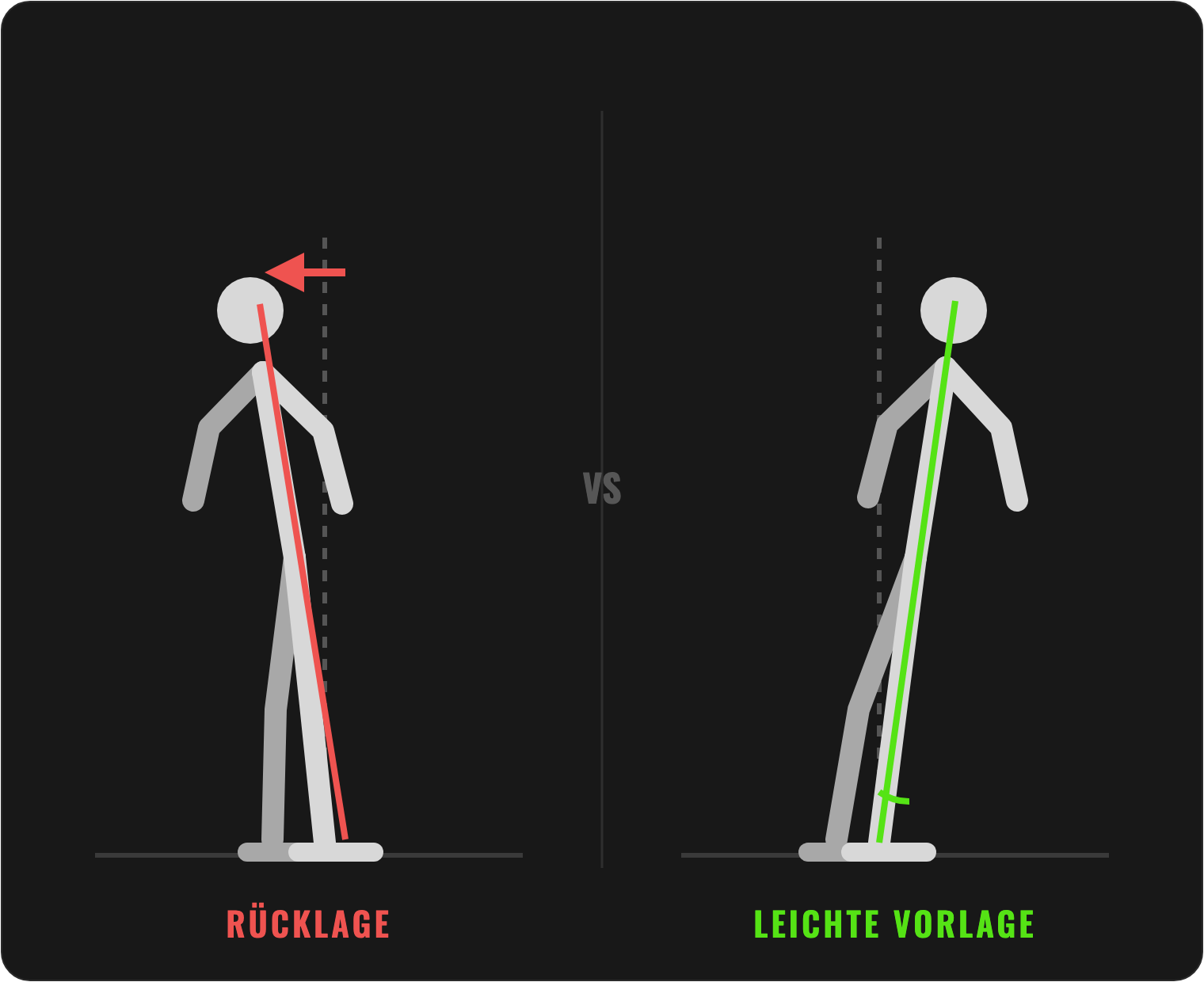
Your core stays stable and upright. Imagine an invisible thread gently pulling you upward from the crown of your head. Instead of hinging at the hip, aim for a slight forward lean from the ankle — that brings your center of gravity optimally over your foot strike.
Runners with a strong core clearly have the edge here — those muscles keep your upper body upright even under fatigue. A pelvis tilted slightly forward automatically helps keep the torso upright too.
### 3. Correct arm work Your arms are the counterweight to your leg rotation — and your pacemaker: move them faster and your cadence rises automatically.
They swing close to your body, parallel to your running direction, front to back, at roughly 80 to 100 degrees between forearm and upper arm — essentially a right angle. Keep your hands relaxed: a loose fist, thumb resting gently on the index finger.
## Common mistakes - "Sitting while running." Many tilt their pelvis backward so the hip no longer fully extends — the upper body looks slumped. This blocks power transfer and often causes lower back pain. - Arms crossing in front of the body. Your hands should never cross your midline — swinging sideways in front of your chest creates instability. Swing straight forward and back, or your core has to work against it and wastes energy. - Overstriding. Lean too far back and you plant your foot far ahead of your center of gravity. That acts like a brake and channels impact forces straight into your knees and shins.
## Safety notes Incorrect posture increases the load on your joints, and overuse damage often creeps in unnoticed. Safety in running also means: reading pain correctly.
Mild muscular stiffness at the start is normal. Sharp pain, or pain that changes your running form, is a clear stop signal — end the session to avoid something worse. Make core and stability training a fixed part of your week — only a strong core stops your pelvis from dropping under fatigue.
## Pro tip Use the rubber band trick to improve hip extension and posture: imagine a rubber band attached to your center of gravity (about a hand's width below your belly button), gently but steadily pulling you forward.
This immediately helps you stop your hip from collapsing, activates your glutes better, and brings you into a light, fluid forward lean.
### How long until correct running technique feels automatic? Expect 4 to 8 weeks of conscious practice before new patterns like head position or arm work run automatically. Practice in short, focused stretches within your normal runs rather than trying to control your whole session.
### Where should I look while running? About ten meters ahead on the ground, not at your feet. That keeps your cervical spine neutral, relaxes your neck and shoulders, and keeps your airways open.
### Why does my lower back hurt while running? Usually from "sitting while running" — your pelvis tilts back, your hip stops fully extending, and your upper body slumps. That blocks power transfer. Focus on a slight forward lean from the ankle and strengthen your core.
### Do I need to consciously think about my posture the whole time I run? No, that would wear you out. Instead, do a quick posture check every few minutes — head, shoulders, arms, pelvis — and let the rest run automatically. Good posture sets in on its own over time.
### How can I check my own running technique? Get filmed for a few seconds from the side and from the front, ideally with a smartphone. In the video, watch your head position, your forward lean from the ankle, and whether your arms cross your midline.